

Work
Work
Four sites built and run in partnership with Web Leveling. All four are live and all four are ours. Open them and judge the work for yourself.
- Four live sites
- Each one a real address you can open.
- Our own projects
- Built and run by this business.
- Four subjects
- Slang, microgreens law, dreams, sofas.
- In partnership
- With Web Leveling, named on each site.
What these are
Four sites this business built and runs, in partnership with Web Leveling. Each is a live address you can open, read from the middle, and use for what it was made for.
They are shown in full because they are ours. Web Leveling's client work belongs to those clients and stays with them.
What each one had to solve
Four different structural problems, which is why the set is more useful than any one of them alone.
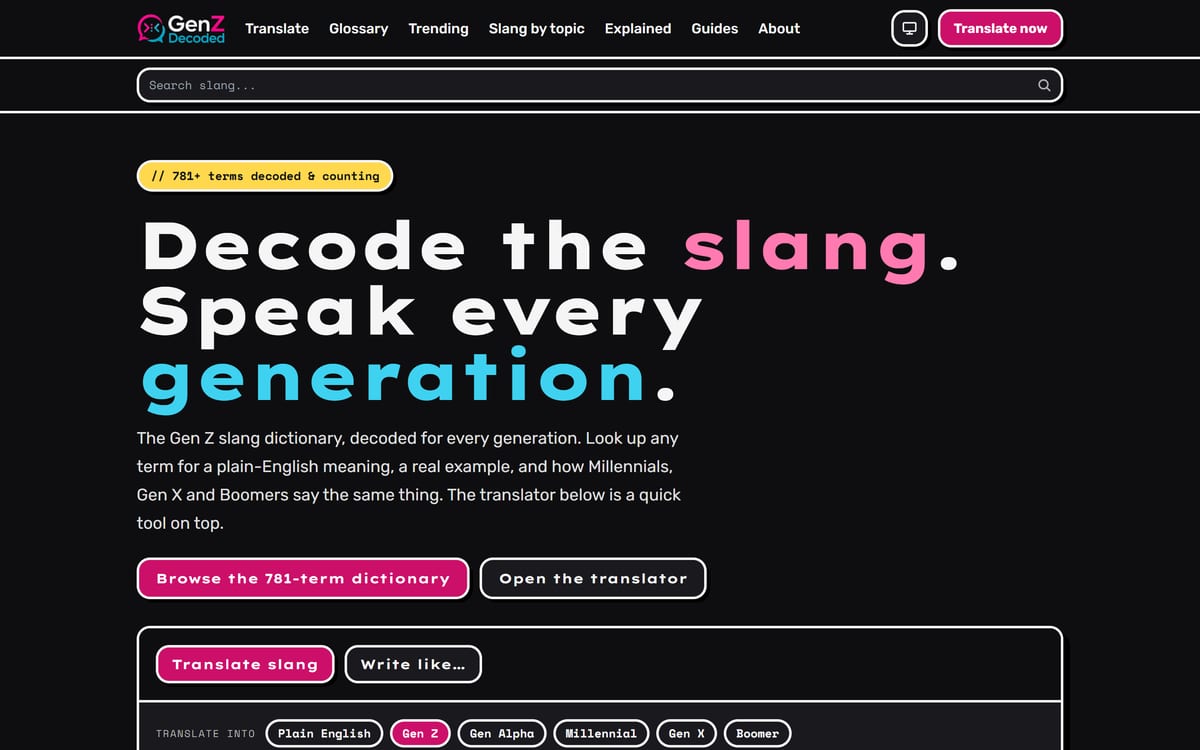
GenZ Decoded
A slang translator and dictionary, where the hard part is scale and structure. Thousands of short entries, organised so a search for one term lands on a real answer instead of a category page, and so the whole thing stays navigable as it grows.
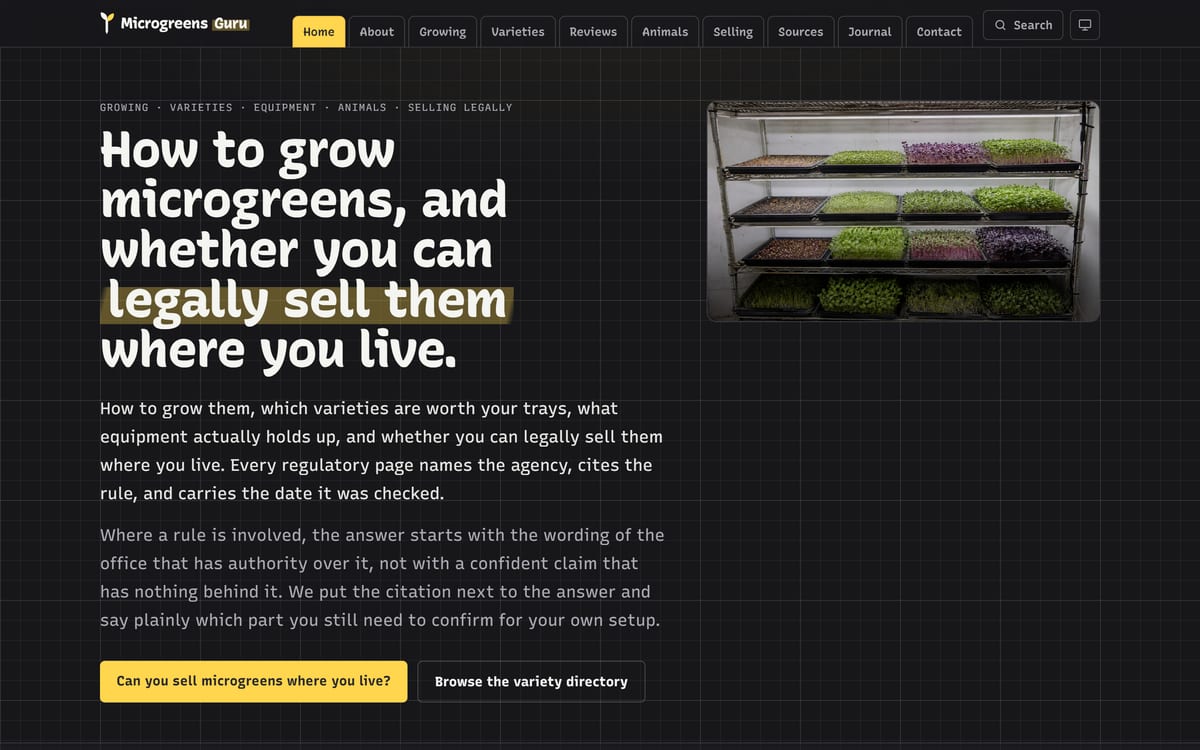
Microgreens Guru
Growing microgreens and the state-by-state law on selling them. The hard part here is accuracy across fifty jurisdictions that each say something different, and presenting that without either oversimplifying it or turning it into an unreadable table.
DreamTold
Dream interpretation drawn from psychology and cultural history. The hard part is a subject with a great deal of nonsense written about it. The work is to be useful and sourced without claiming a certainty the material will not support.
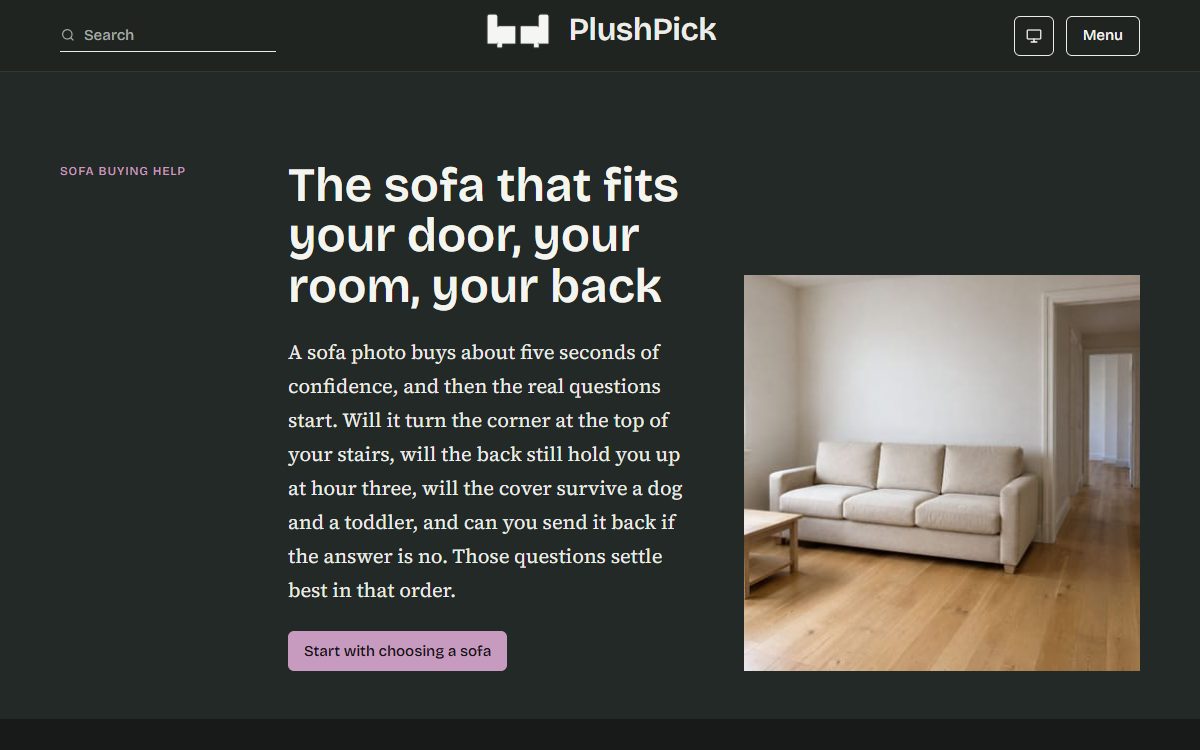
PlushPick
Sofa, chair and recliner buying help, for readers measuring in inches and in centimetres. The hard part is that the answer usually turns on the buyer's doorway and stairs rather than on the product, so the measurements have to carry the piece.
What these have in common
The same four decisions go into a client build.
- Written first. The content was decided before the design, so every page is the length its subject needs.
- Static and owned. No content platform, no database, no plugins to keep patched. Files served from a fast host, which costs very little to run and gives nobody a login to break into.
- Built to be read by machines as well as people. Real content in the served HTML before any script runs. Real links, a unique title and description per page, and structured data that matches what a visitor can see.
- Built to grow. Adding to any of them is dropping in a file and rebuilding, not reworking a template. A client gets the same arrangement. It is what makes a site cheap to keep, which matters more than being cheap to launch.
What to look at when you open them
These five checks work on any site.
How fast the page appears. Not how it scores in a tool, how it feels on your own connection. A site that takes a moment to assemble itself in front of you is telling you something about how it was built, and no amount of design compensates for it.
Whether the writing is actually about anything. Open a page at random and read a paragraph from the middle of it. Filler is easy to hide at the top of a page and almost impossible to hide in the middle of one.
Whether you can find something specific. Pick a term or a topic you would plausibly search for, use the site's own navigation or search, and see whether you land on a real answer or on a category page that makes you start again.
What it looks like on your phone, held in one hand, in whatever light you happen to be in. That is how most people will see anything we build for you, and it is the condition a desktop-designed site most often fails.
And whether anything on it is obviously stale. A date, a claim, a page that clearly stopped being maintained. A portfolio site left to rot is a preview of how the project ends.
What we would build for a local service business
All four of these are content sites. A local build takes a different shape, and the town and service pages on this site are the closer example of it.
A home page that says what you sell and where, then one page for each service, each written to answer the question somebody types when they need that specific thing. That is the part doing the work, and it is where most of the writing goes. A services list with no pages underneath it competes for nothing.
Then a page for each town you serve, each written from its own research. The town pages here show what that looks like: the licence Kennedale requires and its neighbours do not, the newsletter Bedford still mails to households, the airport acreage sitting inside Euless.
Around those, an about page that says who runs the business and since when, a contact route that reaches a person, and the structured data describing the business accurately to search engines and assistants. Then the measurement, in accounts registered to you, so that six months later there is a first-hand answer about what changed.
The projects
Four live sites, each solving a different structural problem.

Talk about your project
Open any of the four, then tell us what is happening with your own site. If you run a local service business, say so; the town and service pages here are the closer comparison for what you would get.