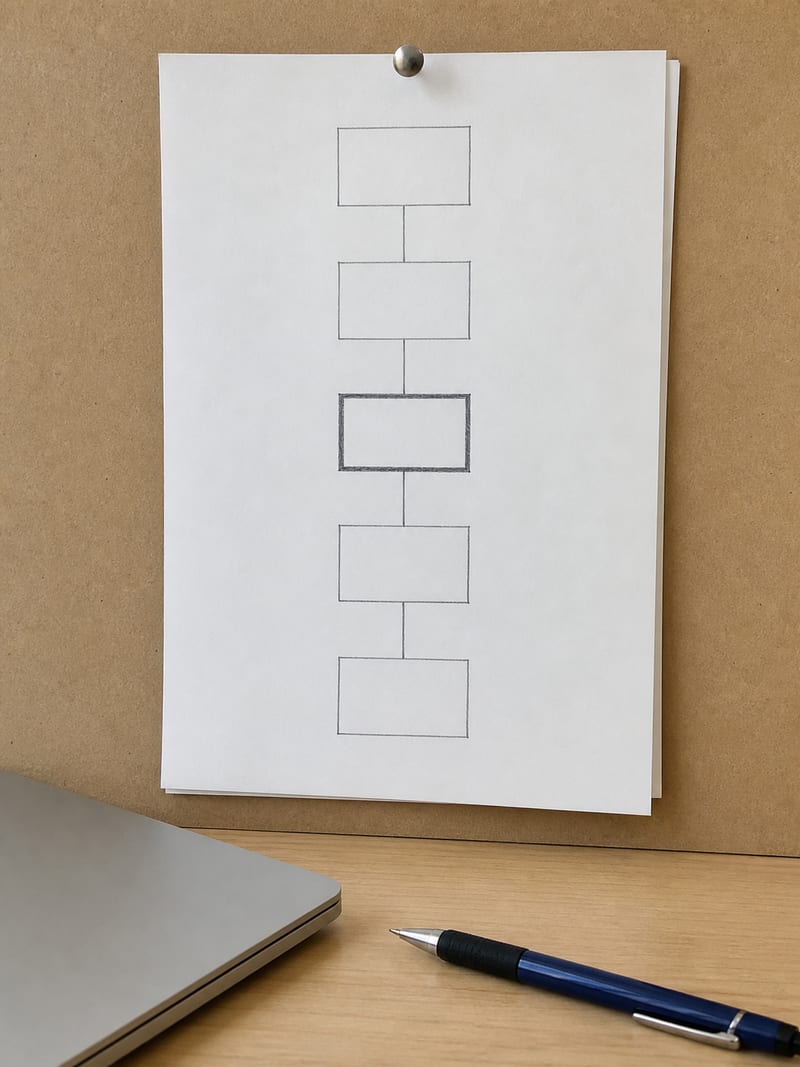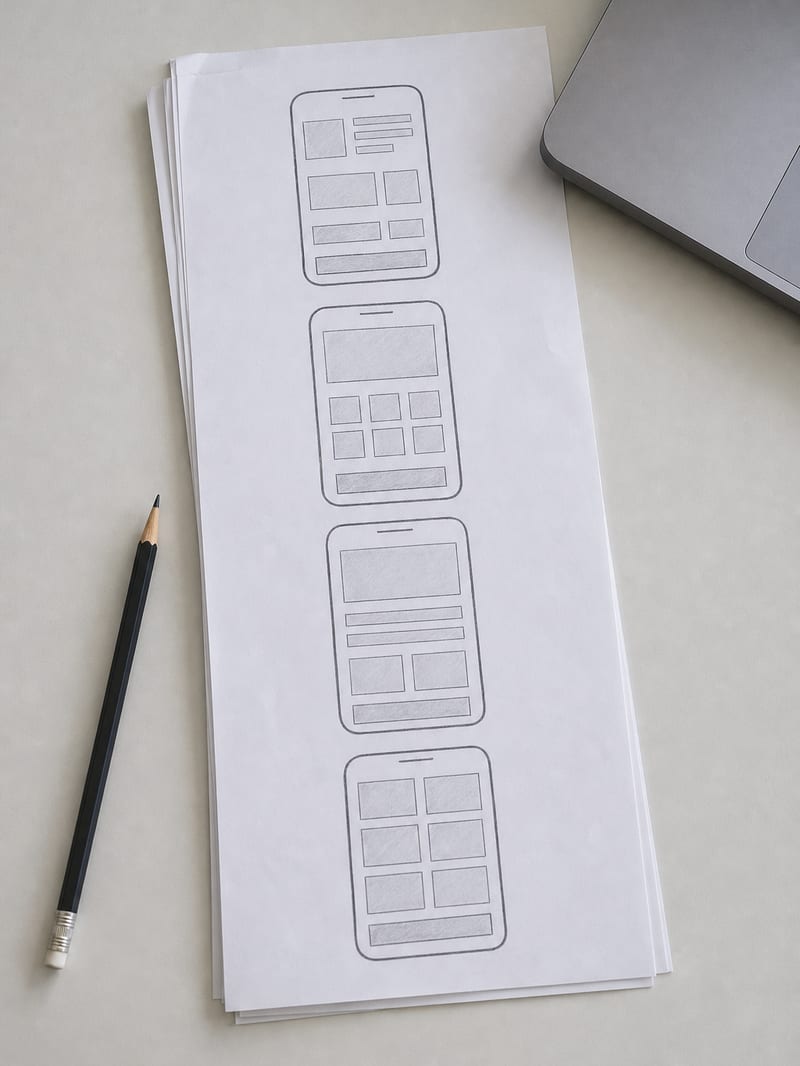
Establishing the facts
What the business is called in full, who owns it, when it started, what it sells, where it works, and what it will not claim. The stage that prevents the most rework, because every later decision refers back to it.
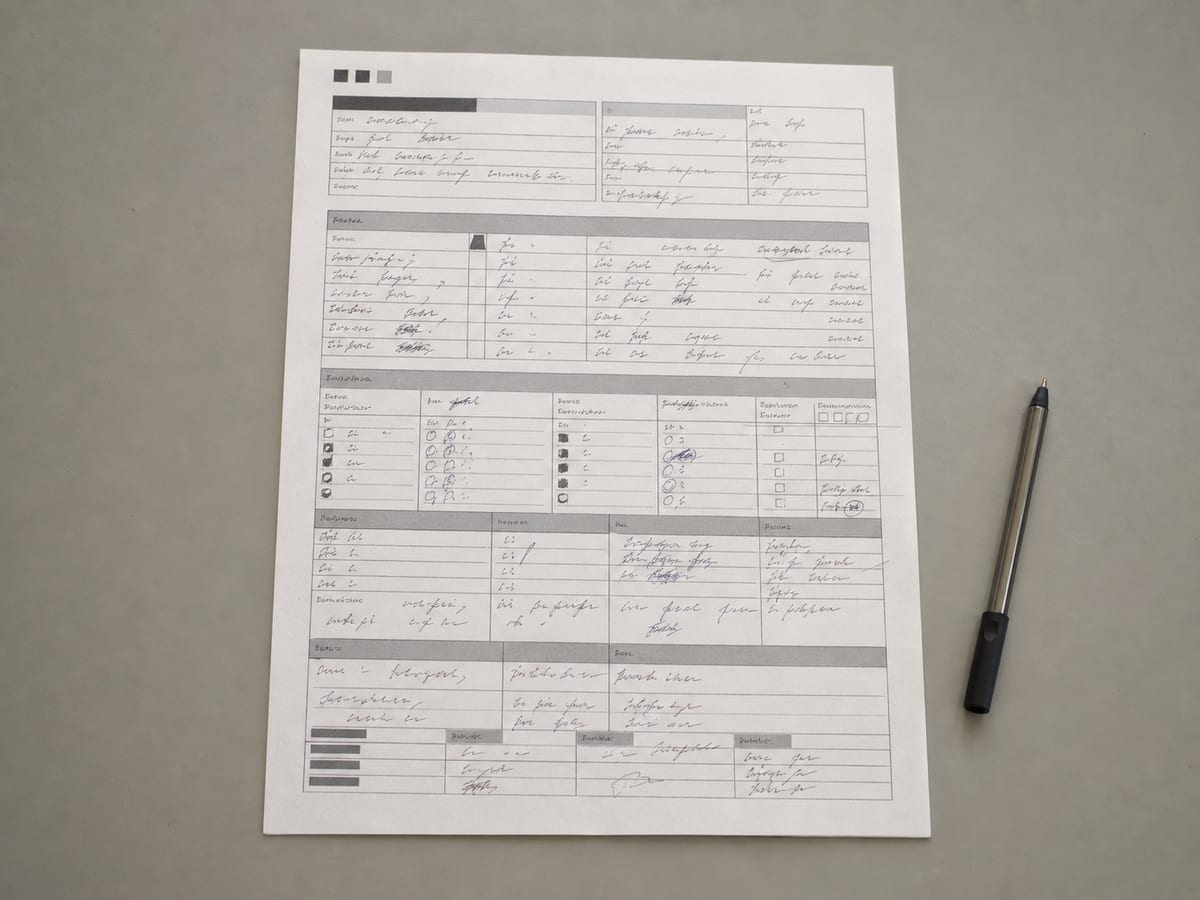
Service
The name, the mark and the words a business is recognised by, decided and written down before anything gets designed around them.
A written brand kit, plus the visual identity that comes out of it: the wordmark, the compact mark, the colour and type decisions, and the voice the business writes in.
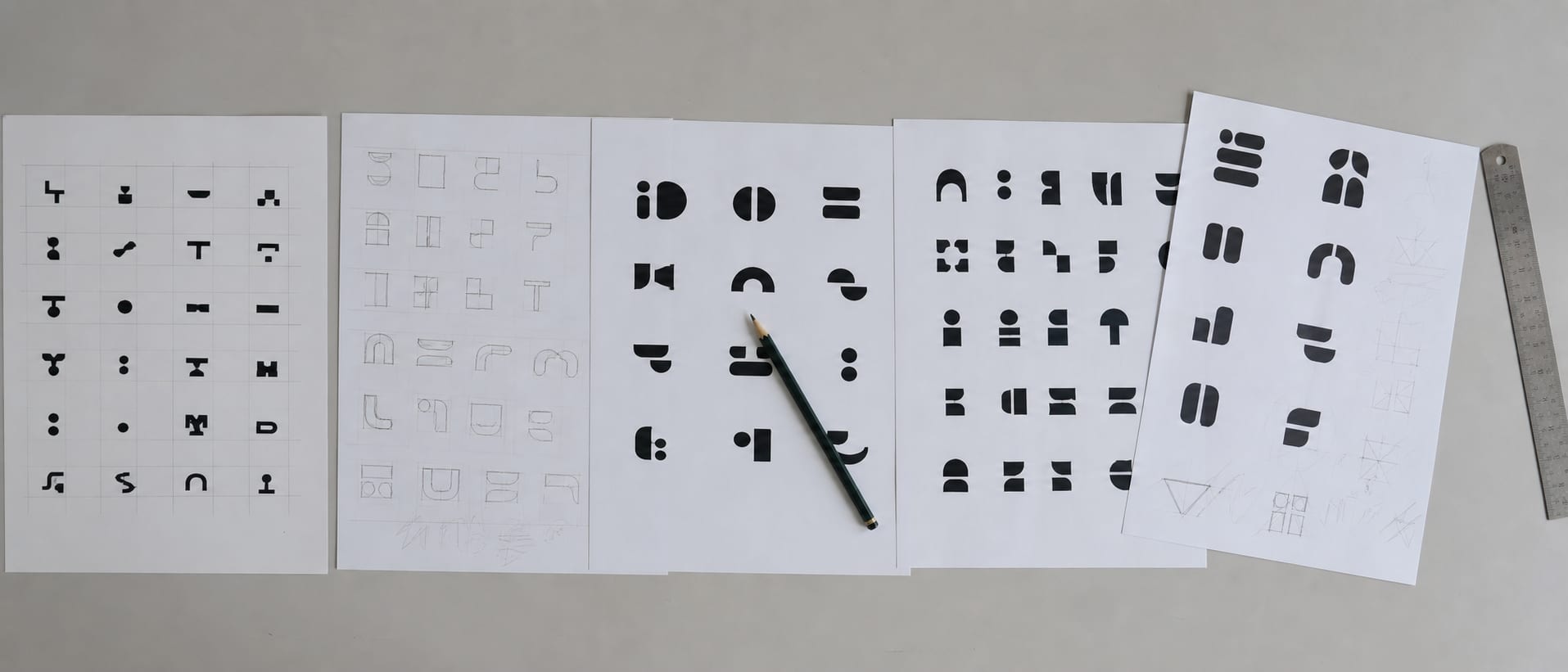
Branding here means a written brand kit plus the visual identity that comes out of it. That is the wordmark, the compact mark for places a wordmark cannot fit, the colour and type decisions, and the voice the business writes in. It also settles the things nobody thinks to write down: what the business is called in full, what it never gets shortened to, what it claims, and what it refuses to claim.
A brand kit is built for every client this business takes on. That is not an extra attached to the end of a web project. It is the document the website is generated from, and without it every page becomes a fresh argument about tone, about what may be said, and about which of three slightly different logo files is the real one.
The visible half is the identity. The half that does more work is written: a fact list nobody has to guess at, a voice a stranger could write in, and an explicit list of claims that are off limits because they are not true yet.
Layout designed around undecided branding has to be argued with later, and that argument is always won by the layout.
A website is where branding either holds together or falls apart in public. If the name is written three ways across five pages, if the logo is text on one page and an image on another, if the tone swings depending on who wrote which paragraph, a visitor does not name the problem. They just trust it slightly less.
Branding decided first gives the site something to be built around. Branding decided afterwards means the design gets rearranged to fit a mark that arrived late, and that rearranging costs money.
There is a second reason that has become more pressing. Search results and AI assistants read text and structure. They do not look at a design. Being consistently and unambiguously named, described and categorised across your own pages is now part of being findable, not only part of looking tidy.
These come up repeatedly.
You have a logo somebody made once and no source file, so it cannot be resized or reversed without going fuzzy. Your business name appears in two or three shortened forms and nobody has decided which is correct. You cannot say in one sentence what you sell and who it is for, so every page says it slightly differently. The site uses whatever colours the logo happened to contain. And nothing written down says what the business will not claim, so each new page claims a little more.
Five stages, in this order.
What the business is called in full, who owns it, when it started, what it sells, where it works, and what it will not claim. The stage that prevents the most rework, because every later decision refers back to it.
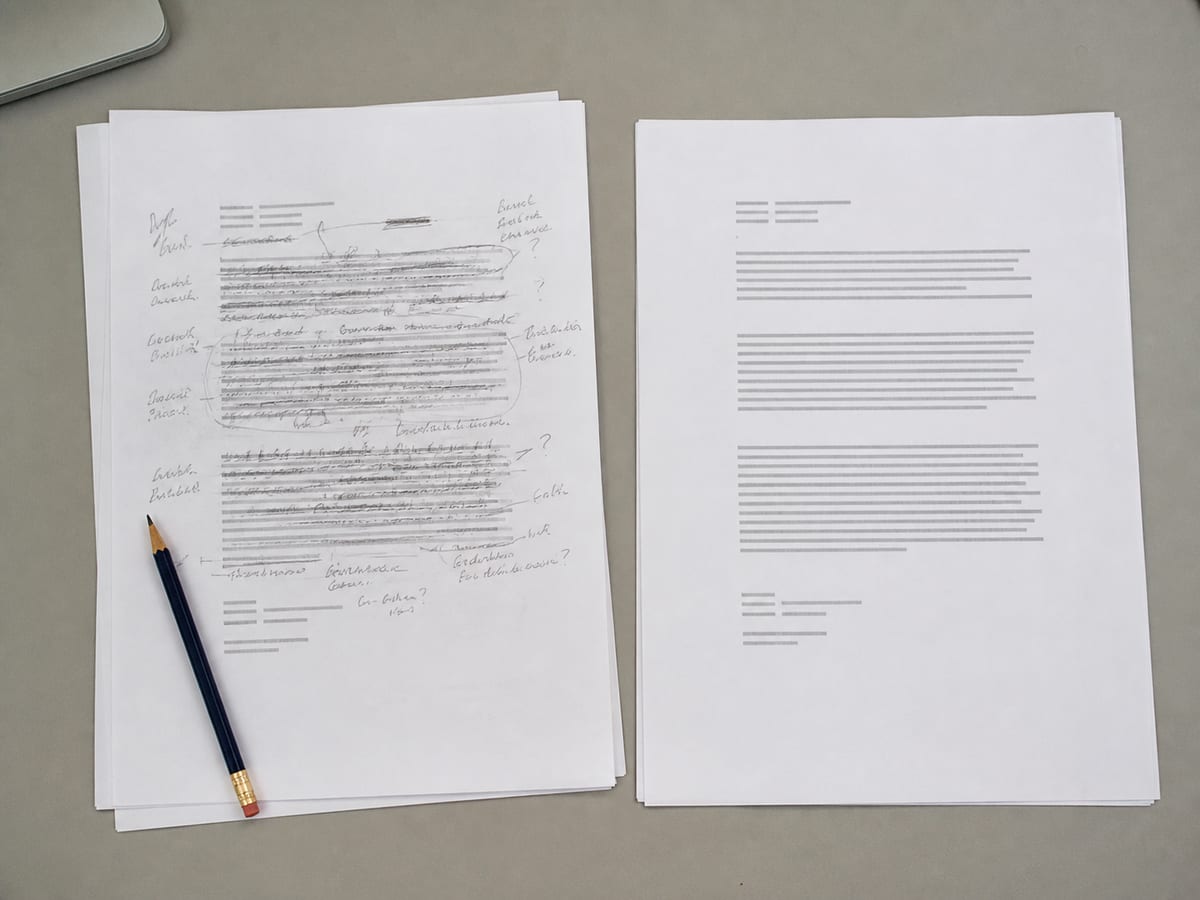
How the business sounds in writing, at a level of detail somebody else could actually write to. A named tone, a reading level, and a list of words and phrases the brand does not use, which is usually the more useful half.
The wordmark first, because for most small businesses the name is the logo and a picture beside it is optional. Then the compact mark for the favicon, the social avatar and the app icon, where a full wordmark is illegible.
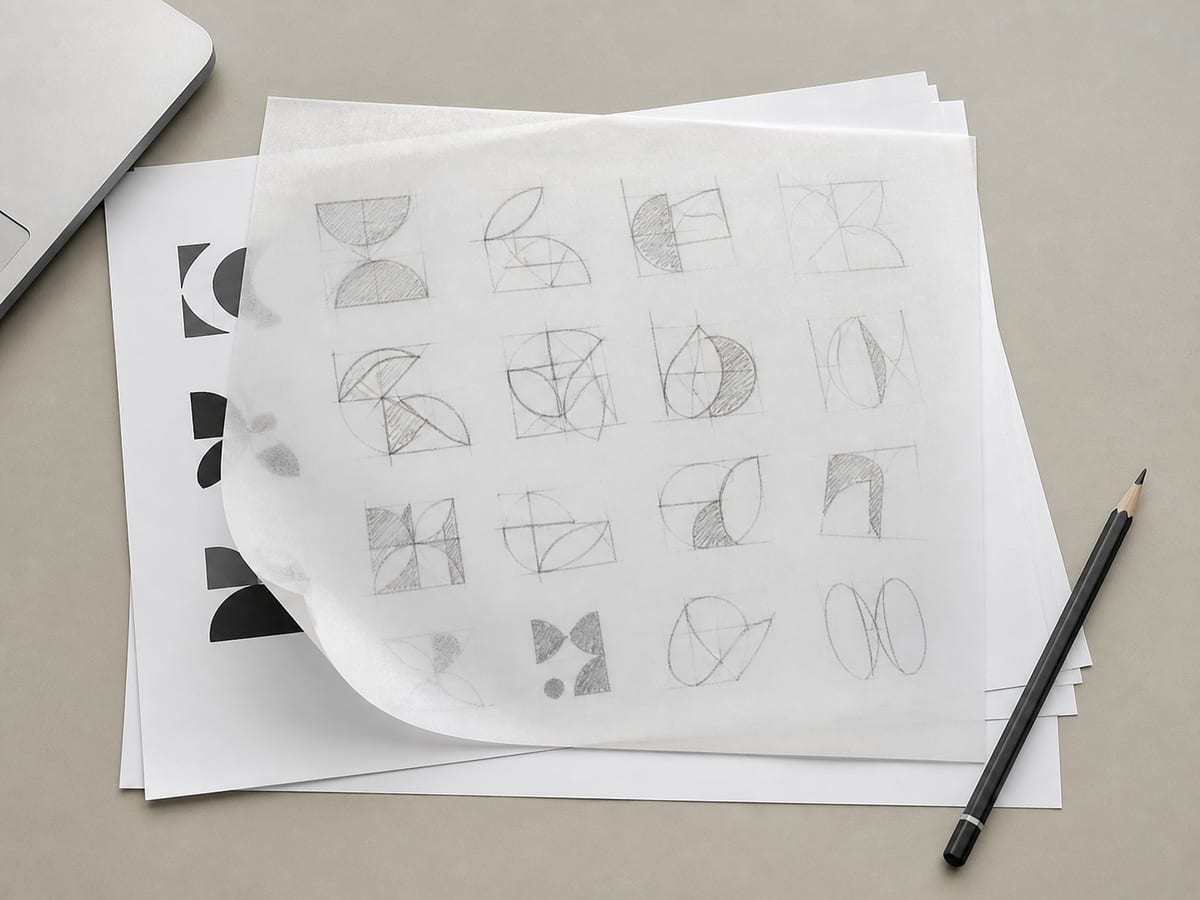
Identity is settled in black and white before any colour is chosen, because colour hides weak construction. A mark that only works once it is coloured in is not finished, and it falls apart the first time it lands on a dark background or a one-colour print job.
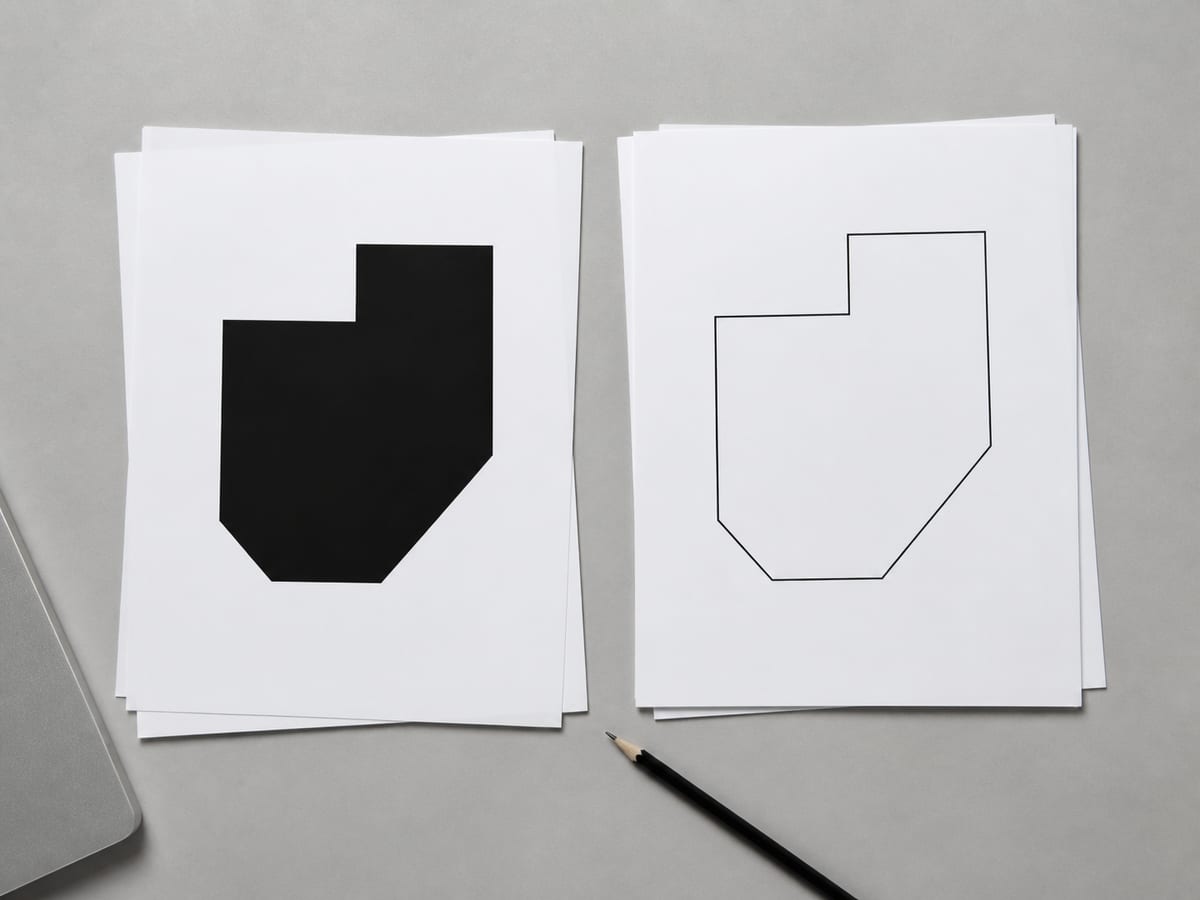
Three renditions, each named for the surface it sits on and not for its own ink colour, a real multi-resolution icon file, and the brand kit document. All handed over in editable form, in your name.
Files you keep, not access to a system you rent.
The facts, the voice, the audience, the claims that are off limits, and the reasoning behind each. Every later page is generated from this, which is why it keeps earning after the project ends.
Wordmark and compact mark in the renditions a real build needs: one for light surfaces, one reversed for dark, one single-colour. Plus a proper multi-resolution icon, because browsers ask for specific sizes.
Why this typeface, why this colour, why the mark is drawn as it is, and what must never be done to it. A rule with its reasoning attached survives a change of hands. A rule without one gets overruled by the next person with an opinion.
Three things move the number.
The first is how much is already settled. A business that can state its name, its offer and its audience in plain sentences needs the identity work and little else. A business where none of that is agreed is buying the decisions as much as the drawings.
The second is whether an identity already exists and is being kept, adjusted or replaced. Working with a mark you already own and want to keep is a different job from drawing one, and usually the cheaper one.
The third is scope beyond the essentials. Signage, vehicle livery, print and packaging each carry their own requirements, and each is priced as its own piece of work.
All four of these make the work cheaper.
Find out whether you hold the source files for your current logo, not just an exported image. Write your business name exactly as it should always appear, and note every shortened version you want to stop using. Write down, in one sentence, what you sell and who it is for. Then list the claims you would not want made on your behalf, because that list is more useful than a mood board and almost nobody has one.
No, and the logo is the part that solves the least. It is one output of the work. The written brand kit is what stops the same questions being re-argued on every page afterwards, and it is what the site is generated from.
Often not the drawing, but usually the document. Plenty of businesses have a mark they like and nothing written down about how the business talks, what it claims, or what it is called in full. That is the gap worth closing, and it is the cheaper half.
Yes, and sometimes that is the right answer. Keeping an identity you already own and are known by is a legitimate outcome. The work then becomes making it usable: proper files, defined colours, and written rules so it stops drifting.
Because colour hides weak construction. A mark that reads clearly in one colour reads in any colour. A mark that needs its palette to work falls apart on a stamp, a one-colour print job, or a dark background.
You do. The files, the source artwork and the document are handed over in your name. If you stopped working with us afterwards you would keep all of it, and somebody else could pick it up.
It is much cheaper if it does. It can run alongside a build, but decisions made late get designed around late, and that is where the avoidable cost sits.
Tell us what exists now: the name, the logo files you can find, and what you can already say about the business in one sentence. You will get a reply about how much of this you need, and often what is missing is the document rather than a new drawing.