

The Pages a Service Business Website Needs, and the Ones It Does Not
Cal HewittPublished 10 min read
- what goes on a site
- getting found
- hiring someone
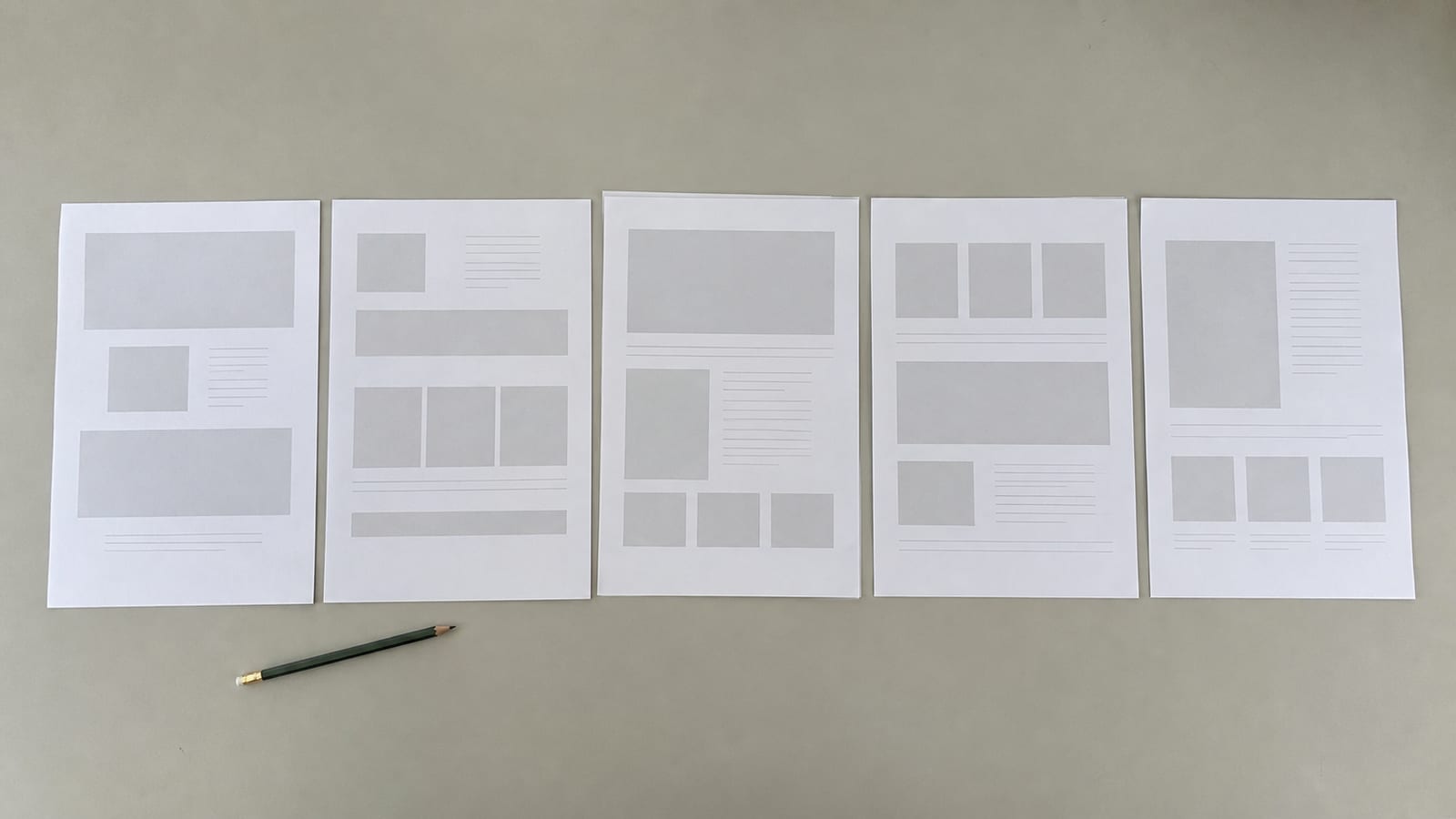
Somebody has quoted you a five-page website, or you already have one, and you cannot tell where the number came from. Whether it was worked out from your business or it was simply the package on the shelf is not obvious from the outside, and the question of what pages should a small business website have gets answered online with the same four words every time: Home, About, Services, Contact. That list might be right for you. It might also quietly fold three genuinely different services into one paragraph, or cover four towns you actually work in without naming any of them. Owners asking about this in public describe wanting something simple and manageable, and worrying in the same breath that they will end up paying somebody every time they want to change a sentence. Both worries are reasonable, and they are separate questions. Here is how to work out your own number, starting from what a visitor is trying to do rather than from a package.
Key Takeaways
Google publishes no preferred page count
Its guidance asks whether content is helpful, original and made for people, which means a page-count target never justifies a thin page on its own.
A page earns its place by doing a distinct customer job
If a service has its own buyer, its own questions and enough true information to answer them, it has earned a page. If not, it is a section.
Five is a floor you reason toward, not a number you start from
Three genuinely different services or four real service towns will push you past it, and that is normal.
Leave things off deliberately
A blog nobody has agreed to write, a portfolio of three photos and a pricing page for work you always quote are the usual candidates.
Page count and ownership are different questions
A five-page site can be a locked template you pay to touch, or five files you hold outright. Ask the second question even after you have settled the first.
What Is a Visitor Actually Trying to Do?
Start here, because every page decision falls out of it.
Somebody who lands on a service business site is usually trying to do four things in order. Work out whether you do the specific job they need. Work out whether you cover where they are. See enough to believe you can be trusted with it. Then reach you without hunting.
That is the whole brief. Every page that helps with one of those four has a reason to exist, and every page that does not is decoration you will maintain forever.
It is worth noticing what this reframes. The question stops being "how many pages is enough" and becomes "which of these four jobs is currently unserved". Those have different answers, and only the second one can be checked against your actual business.

Which Pages Does That Leave You With?
Working from those four jobs rather than from a template, a service business generally needs five.
A home page that says what you do, where you do it, and what to do next, in that order. It is a signpost more than a brochure.
A services page that lists what you actually sell, in the words customers use for it rather than your internal names.
Individual service pages for the services that are genuinely different jobs. This is the one most packages skip, and it is where most of the value sits, because a visitor searching for one specific job should land on a page about that job rather than a list that mentions it.
An about page carrying the things that make an enquiry feel safe: who you are, how long you have done this, what you are licensed or qualified for, and what you will not take on.
A contact page with one obvious action, a form that goes somewhere a person reads, and no puzzle about how to reach you.
Google's SEO starter guide is useful here without being prescriptive: it says logical organisation helps both people and search engines understand how pages relate, and that titles should be unique, clear and accurate to each individual page. That is an argument for pages that each have a real job, and it is silent on how many you should have.
Which Services Deserve Their Own Page?
This is the decision that actually changes your number, so it is worth making deliberately rather than by feel.
A service earns its own page when three things are true. It has a distinct buyer or a distinct moment when somebody needs it. It raises its own questions, about cost, eligibility, timing or what happens on the day. And you have enough true, specific material to answer those questions without padding.
If all three hold, it is a page. If only the first holds, it is a section on the services page. If none hold, it belongs in a list.
Does this service earn its own page?
It has a distinct buyer
Somebody comes looking for this specific job, at a specific moment, rather than browsing your whole offer.
It raises its own questions
Cost, eligibility, timing or what happens on the day differ enough that a shared page cannot answer them.
You have real material
Enough true, specific information to answer those questions without padding it out.
Reading the result
All three true and it is a page. Only the first true and it is a section on the services page. None true and it belongs in a list.
The failure mode here is duplication, and it is worth naming because it is common and it does not work. Taking one service page and swapping the town name across a dozen near-identical copies produces thin pages that serve nobody. Google's people-first guidance asks whether content is complete, original and trustworthy, and a page whose only distinguishing feature is a place name struggles on all three. A location page is worth having when you have something genuinely local to say about working there.
There is a real cost to leaving a service off, and it is more specific than lost rankings. Without its own page, that service has no landing place for somebody searching for it by name, no separately reportable URL you can inspect in Search Console, and less room to answer the questions that particular buyer has. That is a reasoning from how Google's reporting works rather than a promise about traffic, and nobody publishes a figure for enquiries lost this way.
What Should You Leave Off, at Least for Now?
Taking the subtractive argument seriously is what keeps the five-page case honest, and there are three usual candidates.
A blog nobody has agreed to write. A blog that stops after two posts dates your site permanently, and it is worse than not having one. Add it when somebody has actually committed to writing it.
A portfolio built from three photographs. A thin gallery invites a comparison you will lose. Wait until you have work you are pleased to show at length.
A pricing page for work you always quote. If every job is priced after a conversation, a pricing page either misleads or says nothing. A clear explanation of how you quote, and what moves the number, does the job better.
None of these is permanently off the list. They are all things to add when the material exists, rather than at launch because a template had a slot for them.

How Do You Plan This Without Guessing?
A workable process, in the order that avoids rework.
Inventory the business first. Every service you actually sell, its boundaries, who buys it, the area you cover, and what a qualified visitor should be able to do at the end of the page.
Collect the real language second. If you already have a site, your Search Console queries show what people typed to find you. Your enquiries, call notes and the objections you answer weekly are the same material from the other direction. Separate the recurring questions from the one-offs.
Then make a decision table, one row per service or recurring question, with four possible answers: own page, section on an existing page, FAQ entry, or leave out. Writing "leave out" next to something is a decision, not a failure.
Then build the structure, give every page a clear purpose, title, address and next action, and only then write. Test the forms with a keyboard as well as a mouse, because ADA guidance identifies inaccessible forms, missing labels and unclear error messages as real barriers, and notes that automated checkers alone do not prove accessibility.
Launch, then take a baseline so that later comparisons mean something.
Planning the pages without guessing
- 1
Inventory the business
Every service you actually sell, its boundaries, who buys it, the area you cover, and the action a qualified visitor should be able to take.
- 2
Collect the real language
Search Console queries if you have them, plus enquiries, call notes and the objections you answer weekly.
- 3
Make a decision table
One row per service or recurring question, with four possible answers: own page, section, FAQ entry, or leave out.
- 4
Build the structure
Give every page a clear purpose, title, address and next action, and decide who will keep it current.
- 5
Write and review
You verify services, areas, credentials, prices and where each form goes. Generic copy is not a substitute for that review.
- 6
Test properly
Mobile layout, forms with a keyboard as well as a mouse, labels, error states, redirects for replaced addresses, and page titles.
- 7
Launch and baseline
Record where you are starting from, so a later comparison means something.
What Will You Be Asked to Supply?
More than most owners expect, and this is the stage where projects stall.
You will need to supply accurate service descriptions, the areas you genuinely serve, your pricing or quoting policy, business identity details, any licences or qualifications, and images you have the rights to use. You will also need to name one person who can approve things.
You should expect to see, in return: a page inventory or sitemap, notes on what each page is for, content drafts or a clear list of what is needed from you, designs, a test link and a launch checklist.
There are operational decisions that are easy to skip and awkward later. Where does each form go, and who reads it? What is the expected response time? Who owns the domain, the platform account and the analytics? Who can change the site after launch, and what does a change cost? Settle those while everyone is still being helpful.
What Does This Cost, and How Long Does It Take?
No primary source assigns realistic durations to the steps of a small service-business project, so any schedule you are given is that supplier's plan rather than an industry norm. The one aggregate figure available is Clutch's 2026 pricing guide, which reports that projects reviewed on its platform lasted around seven months on average. That population covers far more than simple service sites and is much too broad to hold your project against.
The useful move is to turn the timeline into a contractual question rather than a guess. Ask for a dated plan that separates discovery, content collection, structure approval, design approval, build, testing, launch and post-launch fixes. Then ask what pauses the clock, because the honest answer is nearly always late content, photographs and approvals from your side.
Cost moves with the same inventory that drives your page count: how many services need their own page, how much content you supply against how much is written for you, whether booking or payment is involved, and how many locations are genuinely distinct.
Who Owns the Result?
This is the question that survives long after the page count stops mattering, and it is worth asking in the same conversation.
The U.S. Copyright Office is direct in Circular 66: an independent contractor who develops a website or its content is generally the author and copyright owner unless the rights are acquired through a signed written agreement. So, the position needs writing down to exist, in either direction.
Alongside that, check the accounts rather than the vibe. Is the domain registered in your name, with a recovery email you control? Is the platform or hosting account yours or transferable? Are you an owner in Search Console and Analytics rather than a guest? Can you edit a sentence yourself without a call?
A five-page site can be five files you hold outright, or a locked template you will pay to touch. The page count tells you nothing about which one you are buying.
Work out your own page count
1. You sell three services that share one buyer and one set of questions. How many pages?
2. You genuinely work in four towns. How many location pages?
3. Should you launch with a blog?
4. You always quote rather than publish prices. What belongs on the site?
5. What does a five-page quote tell you about who will own the site?
Pick an answer to begin.
What Local Rules Apply in Arlington?
Very little touches your page count, and one thing might touch your forms.
The City of Arlington's business pages cover permits, small-business assistance and local advisers, which are genuinely useful for the business around the website. Nothing there governs how a site is structured.
The one that can matter is privacy. If your forms collect personal information, the Texas Data Privacy and Security Act, Business and Commerce Code Chapter 541, sets out what a covered controller's privacy notice must contain. Whether it applies depends on thresholds and exemptions specific to your business, so it is a reason to check rather than an assumption that every duty lands on you. What every business should do regardless is make sure the privacy notice describes what the forms actually collect and where it goes.
Frequently Asked Questions About what pages should a small business website have
Is five pages enough for a service business?
Often, and it depends entirely on how many of your services are genuinely different jobs. Five is a sensible floor for one clear service in one area. Three distinct services and four real service towns will push you past it.
Do more pages help my search visibility?
Not by themselves. Google publishes no preferred page count and asks instead whether content is helpful, original and made for people. Extra pages help when each one does a real job, and hurt when they repeat each other.
Should I build a separate page for every town I serve?
Yes, if you want to be found in those towns, and each page has to be its own: written from what is true of that town, in the words people there use. Near-identical pages with the place name swapped are thin, and they serve neither a visitor nor a search engine.
Do I need a blog?
Not at launch, and not unless somebody has actually committed to writing it. A blog that stops after two posts dates your site permanently.
What if I cannot publish prices?
Then explain how you quote and what changes the number. That answers the question behind the question, which is whether the reader is about to waste their time.
Can I add pages later?
Yes, and the cost of doing so is the thing to ask about before you sign. Find out what counts as a change request and what one costs.
Who owns the pages once they are built?
Whoever the paperwork says, and the default under U.S. copyright law favours the person who created them unless a signed agreement transfers the rights. Check the accounts as well as the contract.
Moving Forward
Hold your own business up against the four things a visitor is trying to do, then against the leave-off list, and you can answer the page-count question yourself rather than accepting somebody's package number. Most service businesses land on five because five covers those jobs once. Yours might need seven, and knowing why is worth more than the number.
The part that outlasts the decision is what you can do afterwards. A site you can edit, on accounts in your own name, stays useful as your services change. One you cannot touch becomes a slow negotiation with your own website.
If you want a second opinion on which of your services genuinely deserve their own page before anybody quotes you, we are glad to look. We are Arlington Website Designer, working out of Arlington, Texas and the surrounding Tarrant County towns, and nationally for search and writing work. We build sites our clients own outright, the domain, the content, the analytics and the code, with no monthly platform rent. Have a look through the sites we have built, and when you are ready, get in touch and tell us what you actually sell.
The words a website proposal leans on
Tap a term to see what it means.
Information architecture. The plan for what lives where and how pages relate. It is the part that decides your page count, and it is usually agreed before any design work.